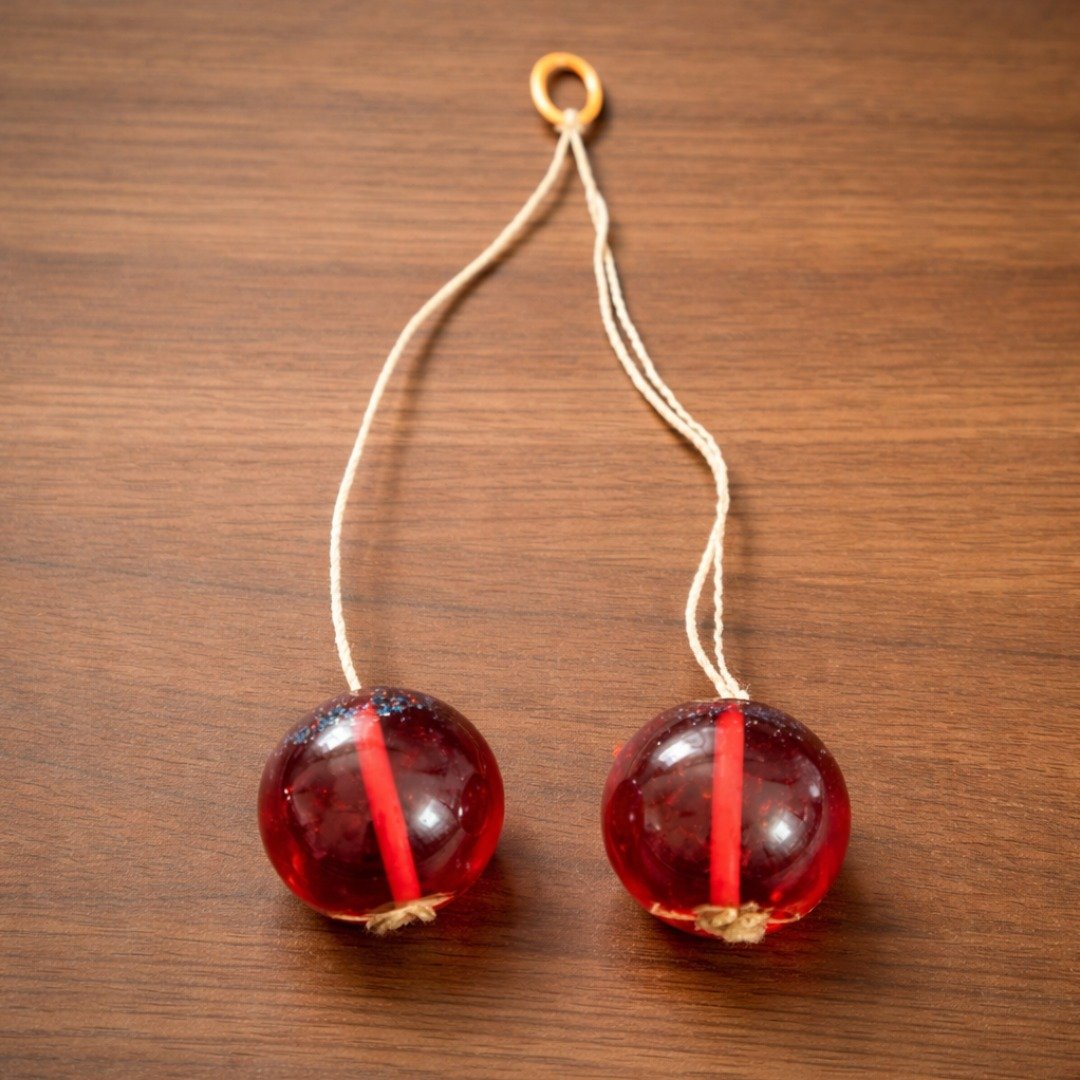
What Is the Toy Called?
- Name: Klackers (commonly spelled Clackers)
- Other common nicknames: Clankers, “clacker balls,” and various regional names
- What you see in the image:
- Two hard plastic/acrylic balls attached to strings
- A top loop/ring used as the handle
- The balls are designed to strike each other repeatedly, making the signature clacking sound
When Did Klackers First Appear?
- Origin period: Late 1960s
- Peak popularity: Early 1970s (especially as a loud, competitive playground skill-toy)
- Materials over time: early versions sometimes used harder, more brittle materials; later versions leaned toward safer plastics to reduce shattering risk
Who Created Klackers? (Inventor / Early Development)
- Patent-level origin: A key early patent for a “clicker/clacker” style toy was filed in 1968 by Willard S. Smith (often referenced as a foundational design tied to the mass-market clacker concept).
- Mass popularity: While many companies produced and branded versions during the craze, the core concept spread quickly and became a category toy rather than a single-brand item in public memory.
What Is the Purpose of Klackers? (What They’re Used For)
- Primary purpose: Entertainment and skill play
- What players try to achieve:
- Rhythm and control—keeping the balls moving in a consistent arc
- Continuous “clacking”—making the balls strike below the hand, and with more skill, above and below in a looping pattern
- Showmanship—the louder, faster, and longer you keep it going, the more impressive (or irritating) it becomes
- Why it became a phenomenon:
- Simple design, instant feedback (sound + motion)
- Easy to start, hard to master
- Turned into a playground endurance and trick challenge
How Klackers Work (Simple Mechanics)
- Basic motion: An up-and-down wrist movement causes the two balls to swing outward and then collide.
- The “clack”: The balls strike each other repeatedly as momentum builds.
- Skill progression (typical):
- Beginner: clacking below the hand only
- Intermediate: controlled, faster clacks without tangling
- Advanced: alternating clacks above and below the hand in a figure-eight style rhythm
Why the Toy Is “Annoying” (and Why That’s the Joke)
The text you provided captures the real cultural memory of Klackers:
- They were loud, relentless, and often played right next to other kids.
- Once someone learned the rhythm, they tended to keep going—because stopping meant losing the “streak.”
- In many households, the toy’s main “feature” became: it never stops making noise.
Safety Reality: The Wrist-Hit Problem (and More)
- Most common minor injury:
- A mistimed swing causes a ball to slam into the wrist or knuckles—exactly like the meme steps describe.
- Bigger concern (historically):
- When hard balls collide at speed, some materials can crack or shatter, sending fragments outward.
- Why it drew attention:
- High speed + hard impact + kids playing close together = frequent complaints and occasional injuries
Why Klackers Still Matter (Nostalgia and Comebacks)
- Klackers are remembered as a symbol of late-1960s/early-1970s toy culture: simple, physical, noisy, and slightly dangerous.
- Similar “clacking ball” toys have resurfaced in different countries and eras, often going viral for the same reasons:
- Hypnotic sound, skill challenge, and pure chaos in public spaces