An Old Saying, A Modern Situation
“You can’t help someone if they won’t help themselves” is a phrase many people know. In real life, it often describes a difficult truth: support only works when the person receiving it is willing to change.
- Ryan Bray, a man from Florida, said he often saw beggars along his route home from work.
- One Sunday, he encountered a man whose story he found especially sad, and he decided to step in.
Ryan’s Offer: “More Than Spare Change”
Instead of giving cash, Ryan said he tried to offer something he believed could create long-term change:
- A paid job at $15 per hour
- Work described as yardwork for his family business
- The goal, in Ryan’s view: a real opportunity to get off the street permanently
The Alleged Response: “I’m Fine Begging”
According to the story, the man refused the offer and claimed he could make more money begging in an hour than Ryan was offering. Ryan reportedly felt shocked and frustrated, believing he had presented a serious chance to improve the man’s situation.
What Ryan Did Next: A Public Sign
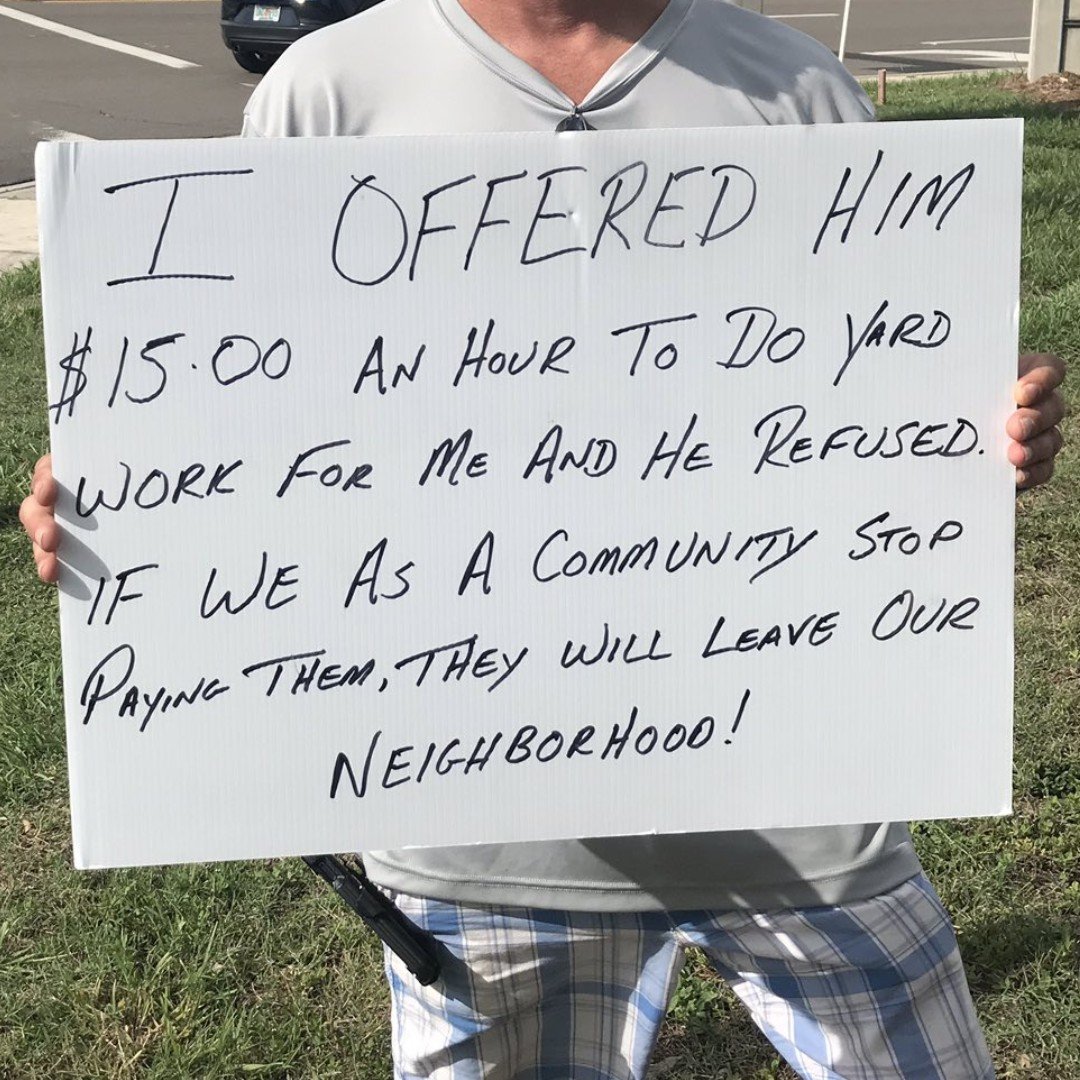
After the refusal, Ryan went home, made a sign, and returned to the same street corner. The message of his sign was aimed at passing drivers and pedestrians. Key points included:
- He said he offered “$15.00 an hour” for yardwork and the man refused
- He urged people not to give money to beggars
- He argued that if the community stops paying, panhandlers will leave the neighborhood
Dispute Over the Facts
The story also describes a disagreement about what happened:
- The homeless man reportedly called Ryan a liar
- He claimed he never received a real job offer
Ryan’s Description of the Interaction
Ryan explained that the man approached his vehicle asking for money, and Ryan responded by suggesting he had “something better,” referring to the job opportunity.
Why This Story Triggers Strong Reactions
This kind of encounter often splits public opinion because it touches on multiple sensitive issues at once:
- Immediate needs vs. long-term solutions
- Cash can help in the moment, but may not address the deeper problem.
- Work opportunities vs. real barriers
- Even if a job is offered, people facing homelessness may have obstacles like transportation, health issues, documentation problems, or unstable living conditions.
- Public shaming vs. community safety
- Some see the sign as a warning to discourage panhandling.
- Others see it as humiliating, and worry it encourages hostility toward vulnerable people.
Practical Takeaways (Without Escalation)
If you want to help in a way that’s safer and more constructive, many communities recommend options like:
- Donating to local shelters, food banks, and outreach programs
- Offering food, water, or hygiene items rather than cash (when appropriate and safe)
- Supporting programs that provide job placement, mental health care, and addiction treatment
- If someone seems in immediate danger, contacting local emergency services or a local outreach hotline when available
Conclusion
Ryan Bray’s story became notable because it highlights a hard question many people wrestle with: What does “help” look like when someone refuses the kind of help you believe they need? Whether viewed as tough love or public humiliation, the encounter reflects a broader community debate about homelessness, dignity, and what actually leads to lasting change.