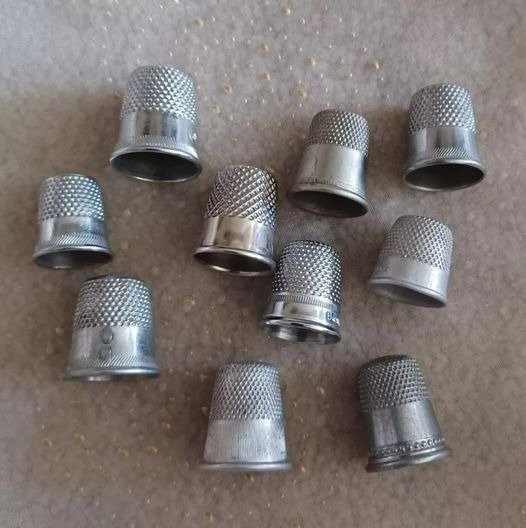
At first glance, a thimble might seem like one of the most modest objects in the world of sewing. It is small enough to disappear in the palm of your hand, easy to overlook in a drawer full of needles and thread, and rarely discussed outside of crafting circles.
Yet behind this tiny tool lies a surprisingly vast and fascinating history—one that spans thousands of years, crosses continents, and reflects changing ideas about work, artistry, and social status. The story of thimbles is, in many ways, a story of human ingenuity itself.
Ancient Beginnings: Protection for Skilled Hands
The earliest known thimbles take us back to ancient times, long before sewing was considered a hobby or decorative craft. Archaeologists uncovered bronze thimbles in the ruins of Pompeii, preserved by the eruption of Mount Vesuvius in the 1st century AD.
These early thimbles were practical objects, designed solely to protect the fingers of people who spent long hours stitching garments by hand.
In an age without sewing machines, every piece of clothing, household textile, and leather good depended on skilled manual labor.
A thimble was not optional—it was essential. These ancient versions were often simple domed caps with indentations to grip the needle, showing that even then, function was carefully considered. Though plain in appearance, they represent the first step in a long evolution.
The Middle Ages: Craftsmanship Takes Shape
As societies grew more complex, so did their tools. During the medieval period, thimbles became more refined, reflecting advances in metalworking and craftsmanship.
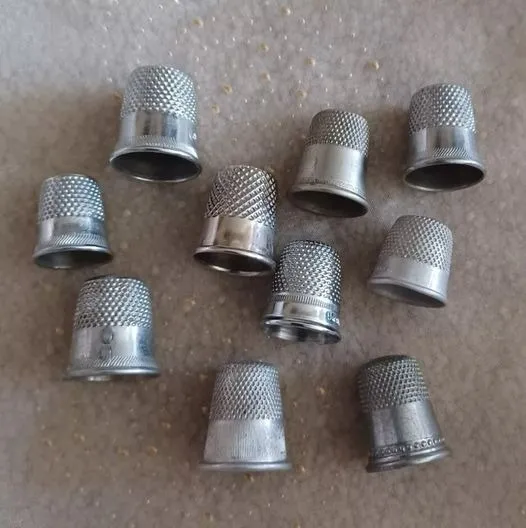
Materials such as leather, wood, and brass were commonly used, depending on availability and purpose. Thimbles were no longer just protective shells; they were shaped more precisely to fit the finger and improve control.
By the 14th century, the German city of Nuremberg emerged as a major center for thimble production. Brass thimbles from this region were exported across Europe, setting standards for quality and design.
These thimbles were durable, affordable, and reliable, making them widely accessible to tailors, seamstresses, and artisans.
This period marked a turning point. The thimble began to shift from a purely utilitarian object into something that could also reflect the maker’s skill and the owner’s profession.
Symbols of Status and Sentiment
By the 17th century, thimbles had taken on a new role—one tied to wealth, identity, and even romance. Among the upper classes, thimbles crafted from silver and gold became fashionable.
May you like



These luxurious versions were often engraved with floral patterns, initials, or symbolic motifs. Some were so ornate that they were rarely used for actual sewing.
In many European cultures, a fine thimble could be given as a gift or included in a bride’s dowry, symbolizing domestic skill, care, and preparedness. In this context, the thimble represented not just labor, but virtue and tradition.

Beyond Sewing: Thimbles in Trade and Culture
Although sewing remains the activity most closely associated with thimbles, they were also used in many other trades. Bookbinders relied on them to push thick needles through leather bindings.
Lace-makers used specialized thimbles to handle delicate threads with precision. Leatherworkers and embroiderers adapted thimble designs to suit their specific techniques.
Thimbles also made their way into folklore and popular culture. One of the most charming examples appears in
Peter Pan, where a thimble is offered as a symbolic kiss—an endearing reflection of its familiarity in everyday life.
In the early versions of the Monopoly board game, the thimble was included as one of the original player tokens, cementing its place as a household icon in the early 20th century.
Collectible Treasures of Today
In the modern era, thimbles have become cherished collectibles. What was once an everyday tool is now admired for its artistry, history, and variety. Collectors around the world seek out vintage thimbles based on material, age, origin, or maker.
Porcelain thimbles painted with landscapes, sterling silver thimbles stamped with hallmarks, and bone china thimbles commemorating historical events are all highly valued.
Some collections tell stories of royal families, famous manufacturers, or specific moments in history. A single thimble can reflect the aesthetics and values of its time, turning it into a miniature historical document.
One of the most celebrated institutions dedicated to thimbles is the Fingerhut Museum in Creglingen, Germany. Housing thousands of examples from different centuries and cultures, the museum showcases the thimble’s enduring relevance and artistic diversity.
The Thimble in the Modern World
Although sewing machines now dominate garment production, the thimble has not disappeared. Hand-quilters, embroiderers, and textile artists still rely on it for precision and comfort.
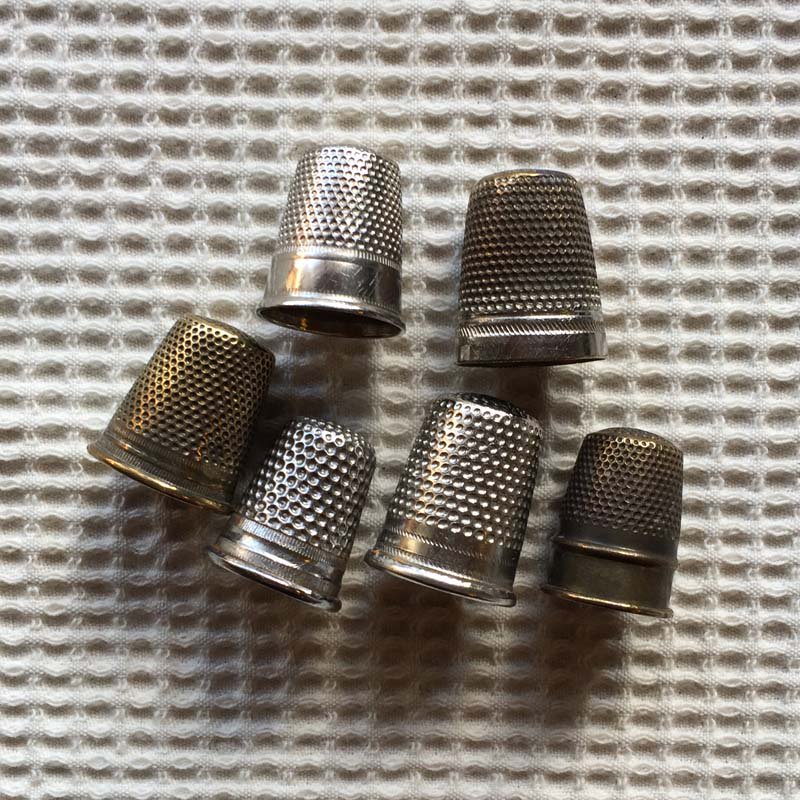
Modern thimble makers blend traditional craftsmanship with contemporary design, producing pieces that are both functional and visually striking.
Some modern thimbles are made as wearable art, while others are created purely for display. Whether used or admired, they carry forward a legacy that connects past and present.
A Small Object with a Lasting Legacy
The thimble’s story is a powerful reminder that even the smallest tools can carry enormous cultural weight. From ancient Roman workshops to museum displays and collector shelves, thimbles have quietly accompanied humanity through centuries of creativity and labor.
They may be tiny, but their legacy is vast—stitched into the history of craftsmanship, culture, and human ingenuity.
The Beauty Queen Who Challenged Hollywood and the FDA

Allison Hayes, born Mary Jane Hayes on March 6, 1930, in Charleston, West Virginia, came from humble beginnings, far removed from the dazzle of Hollywood. After relocating to Washington, D.C., she graduated from Calvin Coolidge High School in 1948. A year later, she won the Miss District of Columbia title, which allowed her to compete in the 1949 Miss America Pageant. That pivotal moment opened doors in local television and sparked her ambition to seek greater opportunities in acting, leading her westward to Hollywood.